Restorative Yoga Vs Yin Yoga
When you look down the class schedule of any yoga studio you will more than likely come across a Yin or Restorative class, but what would you say if you came across a studio schedule with both classes - ‘aren’t they the same thing?’
In terms of both styles they have similarities, both are very different from pretty much all other styles of ‘Yang Yoga’ which involve standing postures, and more dynamic movement, but in the modern world we live in, these two practices nowadays can seem to overlap quite a bit.
Both practices can include props, although with a traditional Yin practice this is less so. Both can be calming and cooling. However they do both have very different lineages and theories, but most importantly different intentions for the student practicing.
The biggest difference you will find between Restorative and Yin Yoga, is that in a Yin Yoga class, it’s about finding that equilibrium in a posture, where it doesn’t feel too intense but neither does it feel too gentle.
In a Restorative Yoga class you’re seeking more softness in the posture using props to support.
Restorative Yoga
Restorative Yoga is based on the teachings of B.K.S Iyengar born in Mysore, India.
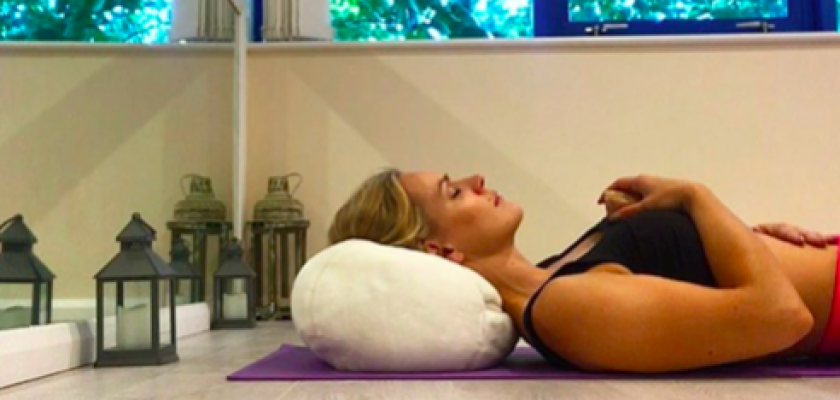
In a Restorative Yoga class you should generally be offered blocks, straps, bolsters - all the props you can think of to ensure you are as comfortable within the posture as you can be.
It’s a perfect practice for someone who is perhaps just starting out with yoga, someone who needs to create time to rest, or someone recovering from an injury or illness.
It should be about working to consciously calm and bring back some balance to your parasympathetic nervous system.
The poses are gentle and having props means the student is encouraged to really soften and lengthen into the support of them, and just relax the body completely, holding zero tension - restoring and renewing the body.
You will be holding postures anywhere from two to twenty minutes - therefore in a Restorative Class you may only practice maybe three to four postures.
Yin Yoga
Yin Yoga is a style of Taoist Yoga which originates from China.
Yin is based on concepts of Chinese medicine and when performing postures, it’s about shifting ‘Qi’ - energy.
In Yin the poses are used to stimulate particular meridians, or subtle channels, as understood in traditional Chinese medicine. Similar to stimulating the Nadi channels in Hatha Yoga.
Yin Yoga works ligaments, joints, bones and into the deep connective tissue through an active kind of pressure.
It increases circulation, flexibility and mobility. It’s about finding a level of intensity within the posture that works for you.
With Yin postures you may be asked to hold a posture anywhere from two to five minutes.
The practice
Both practices take a lot of practice - more than you might initially think.
Keeping still is easy right? Oh so wrong my friend!
The stillness you will find in a Restorative or Yin class can encourage your mind to work on overdrive, you start to notice tiny things, like the small itch you’ve just discovered on the sole of your right foot, or the piece of hair that’s floated down and landed over the left side of your nose.
During both classes you will find that coming to a place of stillness in the body as well as the mind can actually be a much stronger practice than you thought.
In a more dynamic and physically demanding class your mind is focussed on moving into each posture alongside each breath, that mental stillness can therefore sometimes actually be achieved sooner, and sometimes without even realising.
When you come into a posture you’re going to sit in for up to five minutes let's say, with no movement, the mind has far more space to wonder about in. It takes a lot of time and practice to be able to turn off unnecessary thoughts and focus on what will serve you during your practice - which is ultimately your breath.
The postures
A lot of the postures are the same, however some may have different names. For example you may do Pigeon Pose in both classes, but in a Yin Yoga class this would be called Swan Pose.
The reason postures were given different names was so students were reminded that although the pose is the same, they should be practicing with a different intention and intensity.
In a more dynamic class you would be looking to engage muscles, whereas in a less dynamic class like Restorative or Yin Yoga, you’re looking to soften the muscles and really relax into the posture.
Want to know more?
If this blog has peaked your interest, take a look over the courses section of our website where we have a brand new Yin specific training course launching in September!


hey there!
.jpg)
We would like our blog to be a place where you learn new things in the world of yoga, when it comes to business of yoga, asanas, philosophy and pranayama.


.jpg)
