
Why are Strength and Flexibility important in Yoga ?
.jpg)
Why are Strength & Flexibility important in Yoga ?
Flexibility and strength are two fundamental components that significantly enhance the practice of yoga. As practitioners delve into various poses, having a strong and flexible body allows for greater range of motion, proper alignment, and improved balance. Flexibility aids in achieving deeper stretches and poses, while strength ensures stability and support, reducing the risk of injury. Together, they create a harmonious balance, enabling yogis to transition smoothly between postures and explore their limits safely. This guide will explore effective techniques and poses designed to build both strength and flexibility, ultimately deepening your yoga practice and enriching your overall well-being.
Understanding Flexibility
Flexibility refers to the unrestricted and pain-free range of motion in your joints. Joints are surrounded by soft tissues, including muscles, ligaments, tendons, joint capsules, and skin, which all contribute to their smooth functioning. Each person's musculoskeletal structure is unique, resulting in varying degrees of flexibility influenced by the mobility and elasticity of the surrounding soft tissues. A lack of stretching, particularly when combined with physical activity, can lead to the tightening of these soft tissues due to fatigue.
The Connection Between Flexibility and Muscles
The primary function of muscles is movement, achieved through the contraction of muscle fibers. Each muscle fiber contains two types of proteins—actin and myosin—arranged in long rows. When the nervous system signals the release of calcium, these proteins attract and pull toward one another, leading to muscle contraction.
But what guides these proteins in their contraction? That’s where connective tissue, specifically fascia, comes into play. This explanation pertains to a single muscle fiber.
When multiple muscle fibers combine, they form a muscle cell. These cells are analogous to segments of citrus fruit, each enveloped in its own layer of fascia. When these muscle cells group together and are wrapped in another layer of fascia, they create a muscle fascicle. This can be likened to a wedge of citrus, comprising several segments. Ultimately, a muscle itself is a bundle of fascicles encased in yet another layer of fascia called the epimysium, which resembles the peel of the fruit.
Muscles consist of layers of fascia surrounding contracting proteins. Thus, when a muscle contracts, it’s not just the proteins coming together; the surrounding fascia plays an integral role. Similarly, stretching a muscle involves the resistance of the fascia.
Muscular movements rely on two types of muscle groups: agonists and antagonists. Agonists are the contracting muscles, while antagonists must relax and expand to facilitate movement. Myofascia (muscles) can only contract; they cannot stretch on their own. Therefore, effective skeletal movement depends on the coordinated action of the agonist contracting and the antagonist being stretched.
What Limits Flexibility?
Recent studies suggest that individual muscle fibers can be extended to about 150% of their normal length without tearing. However, most physiologists agree that enhancing the elasticity of muscle fibers alone is insufficient for improving flexibility.
So, what limits flexibility?
There are two primary schools of thought on this matter:
- The first focuses on enhancing the flexibility of connective tissues.
- The second examines the role of the nervous system and its feedback mechanisms that influence muscle tone.
Yoga stimulates both aspects, making it an effective practice for improving flexibility.
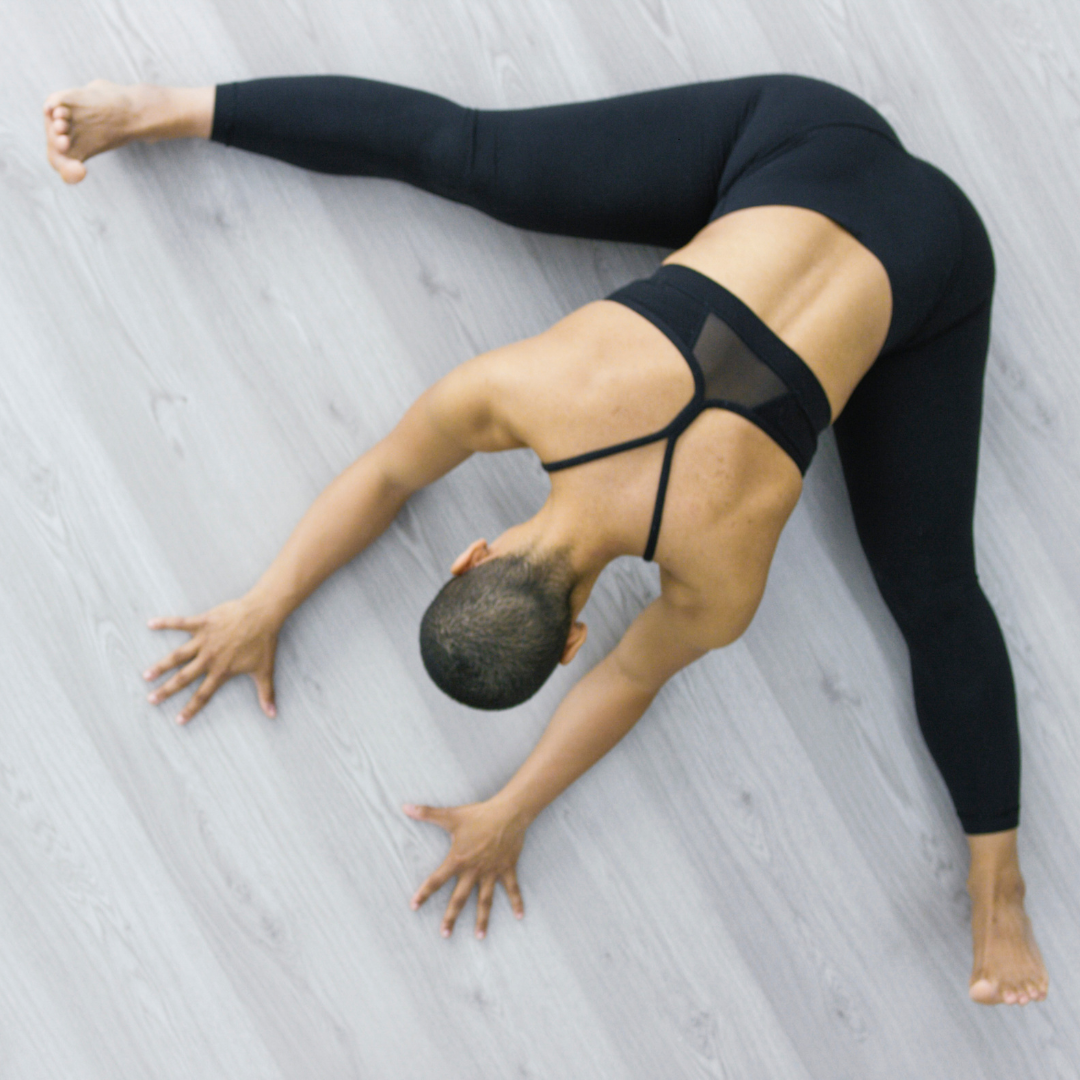
Lengthening Connective Tissue Through Yoga
Connective tissue is essential for understanding the balance of strength and flexibility in the body, and how yoga can influence this balance. This tissue encompasses bones, cartilage, muscles, fascia, tendons, ligaments, and scar tissue.
Composed of collagen and elastin, connective tissues play crucial roles: collagen provides strength and stability, while elastin offers elasticity. The unique proportions of these proteins result in a diverse range of connective tissues.
When studying flexibility, we focus on three main types of connective tissue: tendons, ligaments, and muscle fascia:
- Tendons are robust tissues that connect muscles to bones. They are managed by fine motor coordination and can stretch only about four percent; excessive stretching can lead to tears or ruptures.
- Ligaments are more elastic than tendons and function to connect bones within joint capsules. It’s important to avoid overstretching ligaments, as this can destabilize joints and lead to injury.
- Muscle fascia accounts for around 30 percent of a muscle's total mass and serves as a significant contributor (41%) to muscle movement resistance. It separates individual muscle fibers, provides structure, and transmits force. Among the various structural components that affect flexibility, fascia is the only one that we can safely stretch.
The Role of Fascia in Flexibility
Flexibility is heavily influenced by the health of our fascia. Limited flexibility often occurs when fascia becomes ‘stuck.’ Common causes include:
- Excessive movement: When subjected to stress, such as weightlifting, connective tissues respond by laying down new collagen fibers, increasing density and strength in the fascia.
- Insufficient movement: Inactivity can lead to muscle atrophy, making fascia rigid due to a lack of stretching or movement. This rigidity results in muscle weakness that impacts overall health.
- Injury: An injury stimulates repair mechanisms, prompting the body to lay down extra collagen fibers and form scar tissue. These additional layers can hinder the fascia’s ability to slide easily, negatively impacting flexibility and normal muscle function.
Neuromuscular Principles for Enhanced Flexibility
Yoga significantly influences our muscles through the nervous system in several ways.
1. Lower Muscle Tone
Gentle and steady yoga practices, characterized by calm breathing and comfortable holds, stimulate the parasympathetic nervous system (PNS). The PNS regulates the body's autonomic functions during a state of rest. Activation of the PNS leads to a generally lower muscle tone, or tonic contraction. When overall muscle tone decreases, resistance to stretching diminishes, facilitating greater flexibility.
2. Stretch Reflex
Our body is equipped with sensory receptors that provide the nervous system with information about pressure, movement, and location. Among these, muscle spindles are specialized receptors that measure the length of resting muscles. If a muscle's length suddenly increases, muscle spindles trigger an involuntary contraction to protect the muscle. Research indicates that this stretch reflex poses a significant challenge to improving flexibility.
When performing stretches, including slow and static variations, the stretch reflex is activated. For example, in a forward bend, the muscle spindles in the hamstrings signal for resistance, increasing tension in the very muscles being stretched. This is why developing flexibility is a gradual process. The intentional and prolonged stretching during yoga practice allows for incremental progress in overriding the stretch reflex.
3. Golgi Tendon Organs and PNF
Golgi tendon organs, located where the muscle and tendon meet, differ from muscle spindles, which reside in the muscle belly. While muscle spindles monitor increases in muscle length, Golgi tendon organs gauge the force within the tendon. Excessive tension from muscle contraction can trigger the Golgi tendon reflex, prompting the muscle to relax to prevent injury.
When muscles contract, they generate tension at the tendon junction where the Golgi tendon organ resides. This organ detects changes in tension and sends signals to the nervous system. If tension surpasses a certain threshold, it initiates a lengthening reaction, halting muscle contraction and encouraging relaxation. This reflex, known as the inverse myotatic reflex or autogenic inhibition, is crucial in protecting muscles, tendons, and ligaments from injury. The lengthening reaction occurs because the signals from the Golgi tendon organ overpower those from the muscle spindles.
Proprioceptive Neuromuscular Facilitation (PNF) is a highly effective technique for achieving quick and significant improvements in flexibility.
To apply PNF in a forward bend, engage your hamstrings in an isometric contraction by pushing your heels down against the floor just before reaching your maximum stretch. Hold this contraction for 5 to 10 seconds. Upon releasing, you should find that you can bend a bit deeper. This technique manipulates the stretch reflex by having you contract the muscle while it is near its maximum length, allowing the Golgi tendon reflex to take precedence, which helps trigger muscle lengthening.
Understanding Physical Strength
To grasp the concept of physical strength, we can begin by examining the balance between strength and flexibility, often seen in skilled practitioners across various disciplines. Before we can build strength, we must first define what it is.
Physical strength encompasses different types depending on the activity. For example, an Olympic weightlifter relies on distinct skills compared to a gymnast. Additionally, strength includes factors like stamina and endurance. Weightlifting typically involves a single, powerful display of strength, whereas gymnasts execute a sequence of athletic movements over a longer duration.
Muscle fibers operate on a binary principle: when they contract, they do so completely—there's no such thing as a partial contraction. Muscle fibers cannot adjust their contraction intensity based on the load; instead, the force of a muscle contraction varies as more fibers are recruited by the central nervous system when needed. The greater the number of muscle fibers engaged, the stronger the resulting force.
In some exercises, a larger quantity of muscle fibers is required to generate significant force in a brief time frame, while other exercises utilize fewer fibers, allowing them to alternate contractions and sustain activity for longer periods. Thus, strength arises from both the number of muscle fibers engaged in a movement and the density of the fascia surrounding them, particularly the strength of tendons and ligaments.
Muscle Contractions
Muscles come in various shapes and sizes, each serving different functions. Large muscles like the hamstrings and quadriceps primarily control motion, while others, such as the heart and the inner ear muscles, perform specialized roles. Despite these differences, all muscles share a fundamental cellular structure.
At the cellular level, muscle contraction occurs uniformly. Muscle cells respond to signals from the nervous system to contract, and releasing this signal halts the contraction.
The most basic form of contraction is termed a ‘tonic contraction,’ which maintains a low level of muscular contraction, helping to sustain an alert posture. If we become unconscious or sedated, this alertness diminishes, leading to a loss of basic muscle tone, which is why assistance is often needed to prevent injuries in such situations.
Active contractions fall into two main categories:
Isometric Contraction
- Involves pushing or pulling against an immovable object, resulting in no movement.
- Here, the load on the muscle exceeds the tension the muscle can generate.
Isotonic Contraction
- Involves successfully pushing or moving an object.
- The tension generated by the muscle surpasses the load on it.
Isotonic contractions can be further classified into:
Concentric Contraction
- The agonist muscle shortens against an opposing load (e.g., lifting a weight).
Eccentric Contraction
- The agonist muscle lengthens while resisting a load (e.g., lowering a weight in a controlled manner).
Understanding these principles provides a clearer perspective on physical strength and its various manifestations in different activities.
Strength and Flexibility in Balance
When considering the impact of exercises on our fascia, we can easily compare weightlifting, which primarily involves isotonic contractions, to yoga, where we hold postures for extended periods and engage in isometric contractions.
In yoga, we engage our muscles in a more elongated state rather than just shortening them. This approach allows us to manipulate the fascia, aligning its fibers with the length of the muscle and enabling the various layers of fascia to slide smoothly over one another. In contrast, conventional weightlifting focuses on isometric contractions, stimulating connective tissue to develop more fibers for increased strength.
The Principle of Sthira Sukham Asanam
Isometric contractions form the core of yoga practice, rooted in the ancient principle of sthira sukham asanam. This principle suggests that when both body and mind are steady and comfortable, even when faced with challenges, one is in a state of asana. When we hold an asana steadily and with ease, the muscles involved are engaged in isometric contraction.
As we move through Sun Salutations and transition into and out of poses, we utilize various muscle contractions, including concentric contractions when lifting ourselves into a pose. However, we frequently find ourselves in isometric contractions while holding a position or in eccentric contractions as we control our movements against gravity. For example, eccentric contractions occur in Hatha Yoga when bending forward into Uttanasana (hamstring stretch) or lowering straight legs from Shirshasana (back muscle engagement).
Conclusion : The Power of Yoga for Building Strength and Flexibility
In Hatha Yoga, we warm up and challenge ourselves with backbends, where eccentric contractions strengthen and lengthen our muscles. Steady postures like Shoulderstand and Plough Pose involve isometric contractions that promote strength while stretching the fascia. Holding these poses for a duration also conditions our muscle spindles, training them to tolerate more tension before triggering the stretch reflex.
By practising with these principles in mind, you will gain insight into the deep connection between your nervous and muscular systems. As you become more aware of how movements or postures feel and their effects on your breathing, you can train both systems to adopt more effective and healthier patterns over time.


hey there!
.jpg)
We would like our blog to be a place where you learn new things in the world of yoga, when it comes to business of yoga, asanas, philosophy and pranayama.


.jpg)
