
The Four Paths of Yoga

Yoga (the union of body, mind, soul, and spirit) is rediscovering who we are and returning to a life of bliss.
Yogic philosophy suggests that the root cause of all of life’s sufferings is actually a forgetfulness and disconnection with our higher self. This is called avidyā. According to Vedanta, there are three contamination’s of the mind which cause this:
Mala – selfishness.
Vikshepa – monkey mind.
Avavana – not knowing our True Self.
Vedanta (a means of obtaining union with the divine or higher self), recognises that we each have different personalities and preferences, and so it offers us the Four Paths of Yoga, these are 4 spiritual practices, which can help us reach Vedanta.
Even though these four paths all appear quite different, there is really only one Yoga and one Union. They all compliment each other and so it doesn’t matter that we are drawn to one more than the others.
What are The Four Paths of Yoga?
Karma Yoga - Karma means “action,” and Karma Yoga is performing action without attachment to the end result. It is commonly referred to as the path of selfless service (Seva). All of your action are seen as an offering to the Divine rather than driven by any ego. Your heart rids negativity and creates space for compassion, humility and love. Karma Yoga is to do the right thing, it essentially means to follow your dharma (your true purpose) regardless of outcomes and, without expectations.
Bhakti Yoga
Bhakti is the yoga all about devotion. Ultimately to the Divine, but it can be your family or a friend, or something that invokes strong emotional ties with you. It doesn't require long physical yoga practices, it is simply the path of love. It is like an unbreakable thread within you that replaces negativity with positivity, this thread is Bhakti.
People often say they don’t have enough time for their yoga practice because of different life commitments. Bhakti makes serving those life commitments your practice.
All attachments end except love, this is the only attachment that frees us rather than limits us.
Raja Yoga
Raja Yoga means the “Royal Path.” Maintaining control over your own “kingdom” ..your mind.
It’s the path of meditation and mantras.
Raja Yoga is the path most favoured because it can be practiced by almost everyone and doesn’t require you to have a particular belief faith. Raja Yoga says to believe only what you find out for yourself through direct experience.
Although he didn’t actually call it Raja Yoga, this path was best encapsulated by the well known Sage, Patanjali in his Yoga Sutras, under the title ‘Astanga’, or The Eight Limbs of Yoga - Yamas, Niyamas, Asanas, Pranayama, Pratyahara, Dharana, Dhyana and Samadhi.
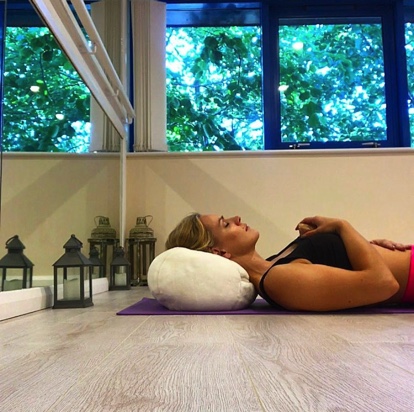
"Search for stillness. That moment when everything just slows down and you are able to just be. Search for it, but don't force it. When it comes to you hold on for as long as you can. When it's ready to leave, let go and search for that new point stillness."
-Rachel Park
Gyana Yoga
Gyana (Jnana) Yoga is said to be the path of knowledge or wisdom, and ultimately enlightenment.
It is believed to be the most difficult path because it requires the mind to go beyond itself and to realise you are ‘One with the Divine.’ Ramana Maharshi, a great Indian Saint and Gyana Yogi, would often reply when asked a question, “First ask yourself who is asking the question.” Gyana Yoga is the study of ancient texts and teachings of the Great Masters but, more importantly, it is the study of your own self.
The Gyana Yogi doesn’t worry about what is being seen but asks, “Why am I seeing it?”
These four Yoga paths don’t represent separate paths, because each path is closely related. When we are full of love - we are Bhakti Yogis. When we stand by others - we are Karma Yogis. When we meditate and perform yoga practices - we are Raja Yogis ..and when we reflect upon the meaning of life and seek truth - we are Gyana Yogis.
Want to know more?
Want to know more about our yoga courses and how they can help you?
If you’d like to know more about the training we offer, you can view syllabuses for all of our current courses on the online yoga courses section of our website.


hey there!
.jpg)
We would like our blog to be a place where you learn new things in the world of yoga, when it comes to business of yoga, asanas, philosophy and pranayama.


.jpg)
