
Teaching and Taking Advanced Yoga Poses
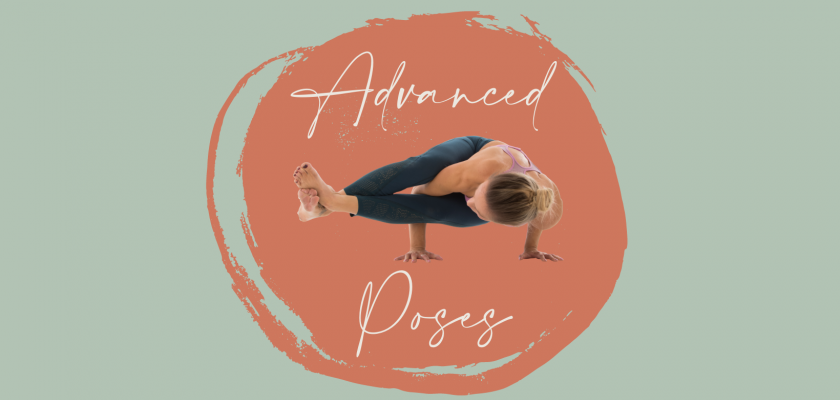
As a Yoga Teacher should we be teaching advancements in class?
Adding in advancements to postures is really down to the class you’re teaching. If you’re teaching a class for beginners, aimed at beginners, in a room definitely full of beginners, they don’t need advancements. Those students need the beginner friendly postures, and modifications, focusing on understanding the breath, the intention and the correct alignment, so they’re safe whilst practicing. As a teacher you need to be ok with that, and not lead your students with any sort of ego, expecting and wanting more than a beginner can give.
Remembering that each time you step on the mat to teach, it’s about your students practice - not yours.

If you’re teaching a mixed abilities class, adding advancements can be tricky, but most definitely can be done. There’s a couple of ways you can do this and it depends on the students you have in front of you, and ultimately only you will know which one will work better at the time.
Taking Bird of Paradise as an example.
Option 1
If you were teaching this in a mixed abilities class, a great way to break this down and ease people in is to access the posture from a Side Angle Pose and build from there, offering a bind to start, a step or two forward to the top of the mat, a foot lift, to standing, to extending the leg - lots of stages and options for people to try.
Brining all students to meet in a Fold.
Option 2
If you have students in class that you know aren’t quite ready for this advancement yet, but also students who you know might just try to take it anyway, another option you have from Side Angle Pose is to teach up to the bind, and simply offer Bird of Paradise as an option - so no teaching points here. Sounds a bit scary I know, but bear with me as I explain!
Your less experienced students will remain in the bind as you’ve taught them, and your intermediate and advanced students can carry on into the posture if they choose. If any students move into the advancement and you notice something you’d like to say as a teaching point, you can always offer it as a point for the whole room, “anyone that”s moved into Bird of Paradise, don’t forget… etc.”
Don’t worry about your beginners at this stage, they can’t do what they don’t know. Whilst people are coming into the advancement option, encourage everyone else to get the full benefits of where they are in Side Angle. There is a lot to learn from every posture each time you step on the mat, whether it’s your first time practicing or you’ve been practicing for 20years. Advancements to the postures you give are important though, because it gives your students that regularly practice something to work towards, something new to try, and it encourages them to keep practicing!
As a student should we be taking advancements in class?
As a student how do you know when you’re ready to move into a more advanced posture?

Yoga isn’t like anything else, the physical aspect alone by its name teaches us that what we’re doing is practicing - there’s no end to learning with yoga or the postures you do.
Yoga Teachers will talk a lot about not practicing with ego. What that basically means is that, unlike your generic exercise class, asana practice isn’t about pushing the body to its absolute limit, it’s about being inquisitive about the space you can create for yourself. So practice, and practice hard if you want, but don’t push, and remember to always listen to your body. Asana practice is about feeling the sensation of the posture, but never about pushing through pain or discomfort.
Remember if you're new to asana practice, moving your body in the way which you will do during a yoga class, is unlike probably anything you will have asked your body to do before. Think how long it takes a child to learn to stand, then to walk, then to walk well! New movement takes practice and small steps to start, and everyone starts somewhere.
You should never feel judged in class because you haven’t taken an advancement option. Advancements aren’t for everyone every day. If you are practicing asanas you can be focussed on many things, your breath, your movement, space, even alignment - but your neighbours practice isn’t one of them, and yours isn’t there’s either!
Every pose or pose variation has its own set of benefits, and intentions for you. In sports quite often after we’ve accomplished a certain goal, we move on to the next and we don’t ever have the need or desire to go back to the first goal, because we’ve already moved on. In asana practice that isn’t the case, advancements to postures don’t mean they’re better or you’re doing better. Childs Pose for example will remain an important posture for all levels, when practiced with the right intention, today, tomorrow and every time you step on the mat.

Want to know more?
If you’re already a 200hr teacher, our 300hr Online Yoga Teacher Training has a full module on advanced postures. If teaching is something you’re interested in pursuing you can join our brand new 500hr Online Yoga Teacher Training course which also covers our advanced postures module - to see the full syllabus for all 3 Online Yoga Teacher Training courses, please visit the courses section on our YogaCourse.com website.


hey there!
.jpg)
We would like our blog to be a place where you learn new things in the world of yoga, when it comes to business of yoga, asanas, philosophy and pranayama.


.jpg)
