
Learn How to Meditate
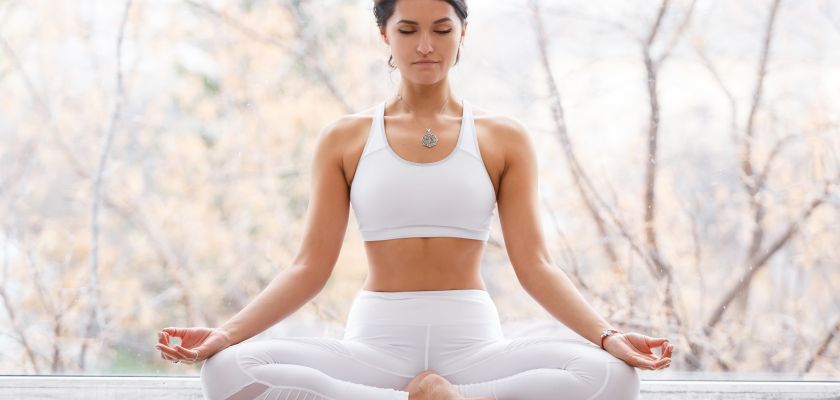
At Yoga Course we understand the importance of mindfulness, slowing down the pace and allowing yourself those moments of peace and tranquillity. Life can be hectic, and the mind can be so busy with thoughts buzzing around that we forget to switch off – this can be detrimental to our emotional health.
Meditation is a perfect way to unwind, lower our stress levels, refocus, and showing kindness to ourselves.
Knowing how to meditate can seem complex and for some unduly spiritual to have a tangible or lasting benefit. However, demystifying these beliefs is a first step in your meditation journey.
Learning how to meditate
There are different styles and ways to meditate, and it’s important that you find what works for you at an individual level – we are all unique and respond differently to situations and new environments. For example, in mindfulness meditation we are learning how to pay attention to the breath as it goes in and out – returning to our breath develops our attention and awareness. The practice of Yoga and accompanying meditative state works to harness this mindfulness meditation, which in turn allows us to see how our thoughts and feelings move patterns.
Meditation is an approach to training the mind and includes concentration meditation – this may involve following the breath, repeating a mantra, and focusing on a candle flame.
While meditation is certainly not a panacea for all worries and strains, it is certainly a proven approach to creating space and an inner balance.
Some helpful points when beginning your meditation journey
When embarking on your meditation practice be patient. Mindfulness in its purest form is about bringing attention to the breath and then back to the breath - noticing when our attention has drifted off.
Find a comfortable place: dim the lights, light a scented candle and find a comfortable position (this might be upright or Shavasana pose)
Start your timer: for some of us this might seem counter-intuitive but giving some form a time boundary can make the meditation more purposeful (and less sleepy!)
Bring your attention to the breath: where do you feel your breath most? In your belly? In your nose? Try to keep your attention on your inhale and exhale
Bring your attention back to your mind: again, connect to the breath - those thoughts and flickers of anxiety should dissipate
Small steps to begin with: even if the meditation lasts for a few moments, that’s absolutely fine! Follow your breath for two minutes - take a deep inhale, expanding your belly, and then exhale slowly, elongating the outbreath as your belly contracts.
Finally, be kind: Professor Mark Williams, former director of the Oxford Mindfulness Centre, says that “mindfulness means knowing directly what is going on inside and outside ourselves, moment by moment.” However, I’m sure very few of us know our intrinsic selves so deeply.
Your meditations will be much more productive when you gently bring your attention back – don’t become too frustrated with yourself when the mind inevitably wanders…
You can be forgiven for thinking that digital meditation aids are counterproductive to the mindfulness ideology but the below have gained in popularity over recent years and received glowing reviews:
Alo Moves Guided Meditation
The Mindfulness App
Headspace.
Calm.
So why is meditation beneficial?
It’s worth emphasising that the purpose of meditation is not to achieve benefits or manufacture a sense of actualisation; it’s simply to be present.
With this is mind, however, there are many conscious and sub-conscious positives that stem from mindfulness practice. We name several below (although there are much more!):
Better-controlled stress and anxiety
Stress reduction is one of the best-documented benefits of mindfulness practice.
Enhanced quality of sleep and deeper relaxation
Meditation has great calming effects and better sleep is one of the most appealing physiological benefits of mindfulness practice.
Improved memory retention
Scientific studies have discovered that a consistent mindfulness practice can help enhance brain function and decelerate memory loss.
A Healthier Heart
Daily meditation practice can improve blood circulation, lower the heart rate and help maintain a healthy heart - the practice increases the blood flow in your brain and may even help your mind defragment (not in the literal sense fortunately!)
Energising and Wellness
Less stress and anxiety might be obvious ones, yet meditation makes it easier to concentrate and achieve a state of flow – converting stored energy and becoming immersed in something productive and enjoyable.
In Buddhist philosophy the greatest benefit of meditation is the emancipation of the mind i.e. those external influences and psychological interferences that can seem impossible to tame or control.
“Meditation and concentration are the way to a life of serenity.” - Baba Ram Dass
Want to know more?
If you’d like to know more about the training we offer, you can view syllabuses for all of our current courses on the courses section of our website - Yoga Course


hey there!
.jpg)
We would like our blog to be a place where you learn new things in the world of yoga, when it comes to business of yoga, asanas, philosophy and pranayama.


.jpg)
