How can Yoga impact my overall wellbeing?
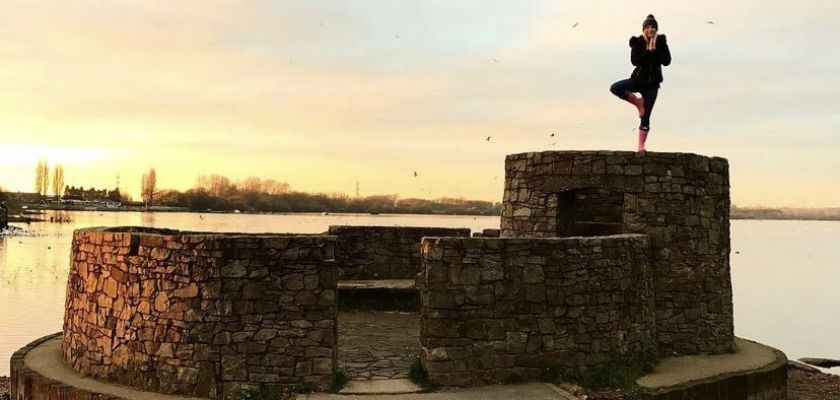
Yoga has been proven over the years to have incredible benefits for the body, but also, and perhaps more importantly nowadays - for the mind!
Mental health has never before been so prominent in our lives, and a subject so widely discussed as it is now. So how can stretching help with mental health you ask? Well, my friends, I'm going to let you in on a little secret ..stretching is about 5% of what yoga actually is, and here's how we think it could help you and your overall well-being.
Pranayama
This is the practice of breath control that we can use within our physical yoga practice, but also prior to it, or at any time anywhere really! In Sanskrit, “Prana” means life energy and “Yama” means control. There are different styles of pranayama, and they all have different benefits.
Learning some of these techniques can be incredibly useful to manage stressful situations or times in your life, and a part of yoga that we can practice off and on the mat. Practicing pranayama has many benefits for the body and mind, physically it is also said to really support lung and brain function, alongside helping with blood pressure.
Simply breathing deeply, with a slow and even pace, sends signals to our parasympathetic nervous system to calm the body down, and that's, why pranayama can be so beneficial to your mental health as it gives you a tool to be able to calm yourself, wherever and whenever.
Meditation
This is a perfect way to unwind, lower our stress levels, refocus, and show some kindness to ourselves with the gift of time.
Meditation is really just a way to train the mind, following the breath, or repeating a mantra, or sometimes focusing on a candle flame.
While meditation is certainly not a complete remedy for all worries and strains, it is certainly a proven approach to creating space and some inner balance.
Some helpful points when beginning your meditation journey would be when embarking on your meditation practice be patient. Mindfulness in its purest form is about bringing attention to the breath and then back to the breath, and noticing when our attention has drifted off. Your meditations will be much more productive when you gently bring your attention back – don’t become too frustrated with yourself when the mind inevitably wanders…
Find a comfortable place and dim the lights, light a scented candle and find a comfortable position to sit or lie in. You can also start a timer for your meditation practice, ..for some of us, this might seem counter-intuitive but giving some form of time boundary can make the meditation more purposeful and potentially less sleepy!
It’s worth emphasising that the purpose of meditation is not to achieve benefits or manufacture a sense of actualisation; it’s simply to be present. It can help you better control stress and anxiety, and so from a regular practice you should feel a stress reduction, this is one of the best-documented benefits of mindfulness practice.
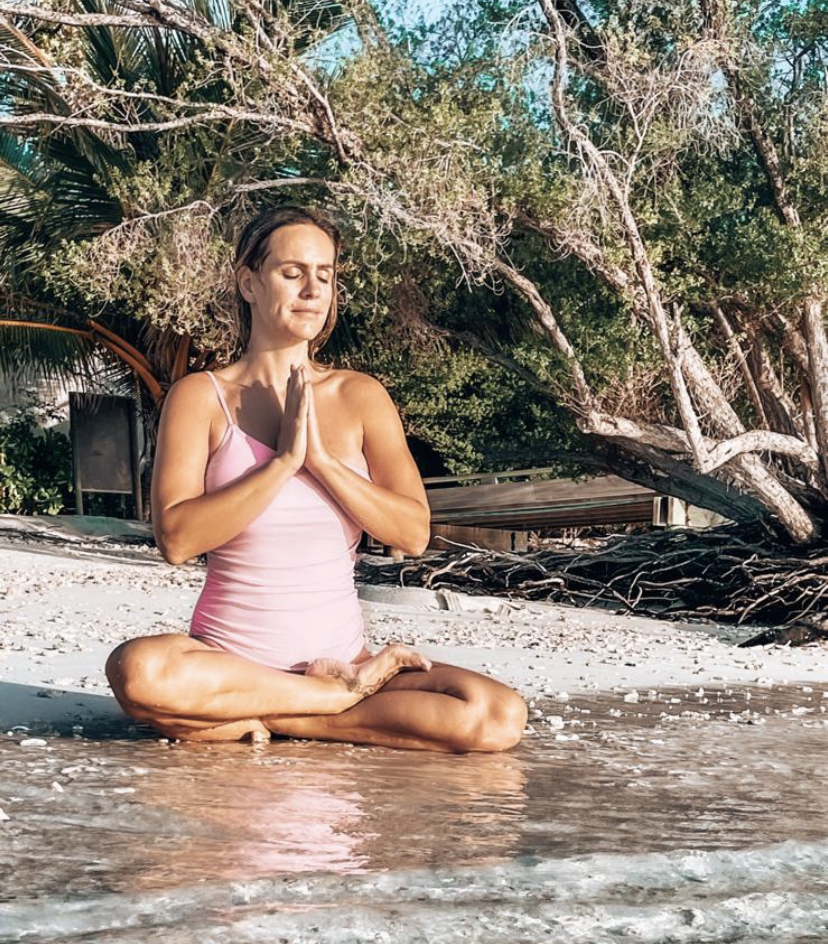
Visualisation
It's used a lot throughout yoga classes, visualisations can be a great form of escapism. Unlike meditation where we’re drawing attention to the breath to still the mind. Visualisations offer the perfect place to explore, maybe a deserted beach, or woodland, or maybe it’s the company you seek and so a bustling city is where you want to go. Where it might be for you, you can explore all the senses on your mini escape - imaging the sights and smells, how you might feel and taste.
They can also be used to manifest things you want in your life. Use visualisations to see yourself in the future doing what it is you want to do.
Asana
What’s the saying, ‘healthy body, healthy mind’ ..this really is true! A regular physical practice can help get rid of unwanted energy, tightness or tension within the body and leave you feeling physically lighter.
People come to yoga for many different reasons, some to increase energy levels, some for time away from life, some to increase mobility and flexibility, and some for the spiritual effects that a regular yoga practice can offer.
However, for some, they come to yoga to find calmness, maybe when they’re going through a particularly anxious or stressful time. Allowing ourselves to be present in each moment can really quiet the monkey mind and make people feel lighter and generally happier.
A lot of the time our minds will wonder throughout a yoga practice, so we use the breath to guide us back to each present moment, but also in and out of postures. Breathing fully can calm the nervous system, and in yoga this is encouraged through the practice moving through the asanas/postures on a breath.
In any yoga practice we move with breath and so having that focus as well can create a kind of moving meditation to leave you in a state of bliss.
Some postures that are perfect for that feel good factor are:
Crocodile Pose
This prone posture can be incredibly calming. As the student is lying flat on the belly there isn’t really any opportunity to hold any tension in the front of the body. Resting the forehead onto the hands which are overlapping at the top of the mat, closing the eyes - a time for finding the breath or coming back to it.
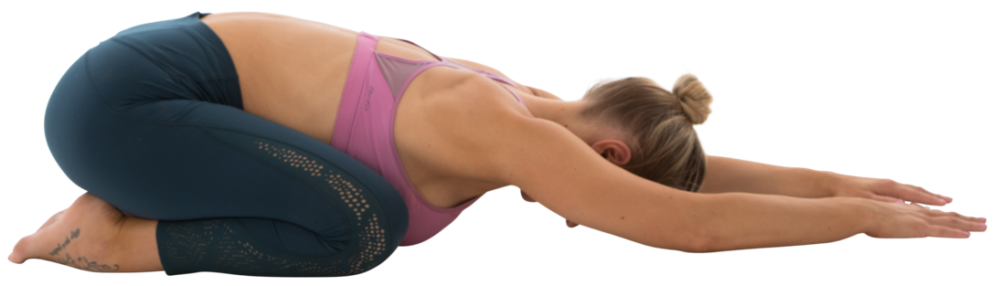
Childs Pose
This resting posture can be done in a few different ways and reap different rewards. From a kneeling position, we can have the knees as wide as the mat with the big toes touching, allowing the body and forehead to rest down towards and onto the mat, reaching the arms out in front of you. This allows the hips to open, heart space to open, warms the hips, and works into the side body and shoulders. Alternatively, from a kneeling position bring the knees together, allow the upper body to rest over the thighs, forehead to the mat or a block, and arms release and rest behind. This time allowing the shoulders to hang heavy and relax, and an area where a lot of tension can be found.
Reclined Bound Angle
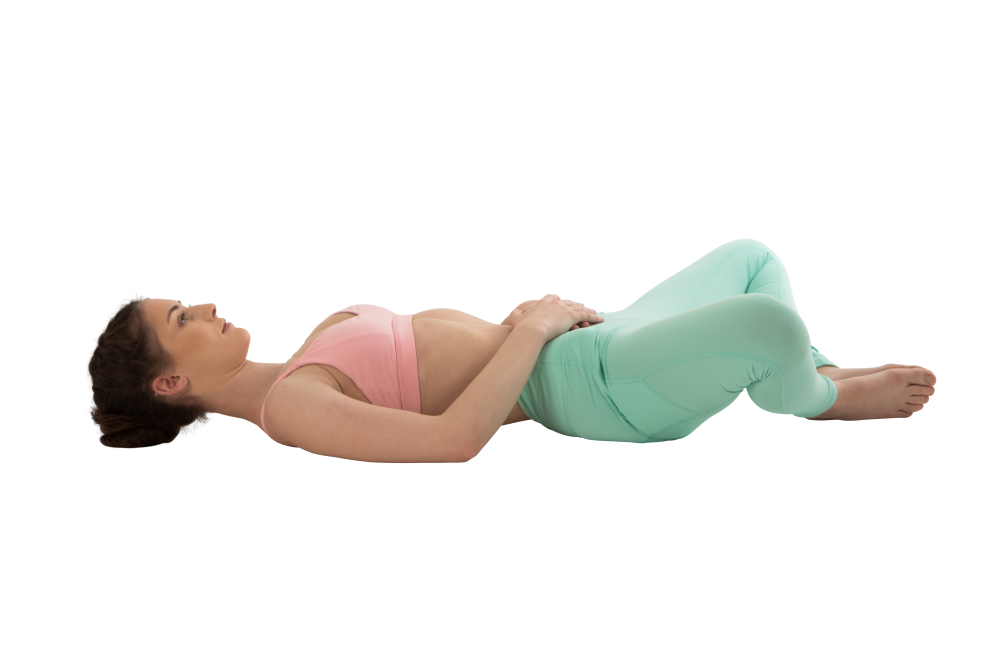
This reclined posture is a wonderful way to gently open the hips without any real load. From a reclined position, place the feet on the mat, then bring the soles of the feet together and allow the knees to fall away from the body. The arms can rest by the side of the body, or hands to the belly for an opportunity to cultivate some breath awareness, or overhead maybe taking hold of the opposite elbow, to create some space over the heart space and warm the shoulders.
Calming Yoga Sequence
So, if we were looking to create a calming class and introduce these postures, what other postures would work well here? We’ve started working the hips and the heart space, so some other postures that would work well with those areas and our calming theme would be:
Cat/Cow - flowing with the breath, leaves little time for the mind to wonder.
Sphinx - gentle way to open the heart space a little more and work the back body a little deeper.
Low Lunge - lovely way to continue working the hips and start to move into the quadriceps without much load.
Cactus Arms - can be incorporated into seated, standing or even in those low lunges above to open the heart space again and warm the shoulders.
Thread the Needle - nice for continuing to warm the shoulders.
So, if we were going to put these into a short calming flow, something people could do first thing in the morning we need to sequence them together - here’s some options below.
Option 1
Crocodile
Childs pose
Cat/Cow
Thread the Needle
*Tabletop
Low Lunge with cactus arms
*repeat on the other side
Tabletop
Sphinx
Childs Pose
Reclined Bound Angle
Option 2
Reclined Bound Angle
Easy seat with cactus arms
Cat/Cow
Thread the Needle
*Tabletop
Low Lunge
*repeat on the other side
Tabletop
Sphinx
Childs Pose
Crocodile
Option 3
Easy Seat with cactus arms
Childs Pose,
Tabletop
Low Lunge
Tabletop
Low Lunge
Tabletop
Thread the Needle
Cat/Cow
Sphinx
Crocodile
Reclined Bound Angle
Want to know more?
If you’d like to know more about sequencing and postures in general, or some of the other elements of yoga we have discussed in this blog, we have modules within our 200hr Yoga Teacher Training and 300hr Yoga Teacher Training and the combined 500hr Yoga Teacher Training
You can view the full course syllabuses on our website www.yogacourse.com
If you have any other questions please contact info@yogacourse.com


hey there!

We would like our blog to be a place where you learn new things in the world of yoga, when it comes to business of yoga, asanas, philosophy and pranayama.


