
How to Improve Hamstring Flexibility with Yoga Poses?
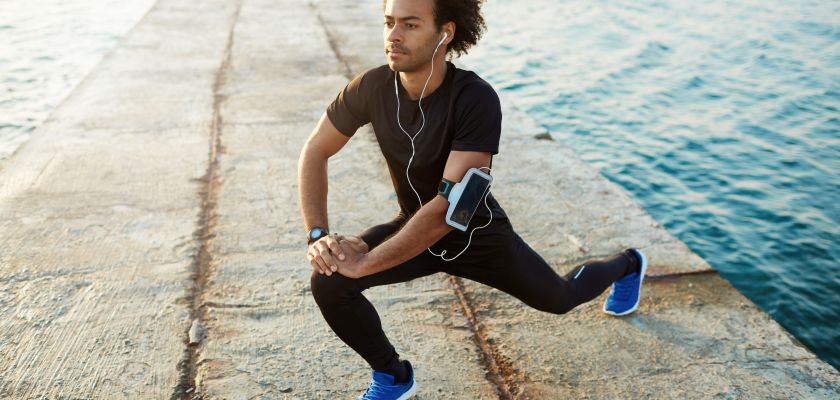
Many athletes use yoga to help with mindset, mobility, flexibility and to generally feel good. Runners are just one type of athlete that can really benefit from yoga, as hamstring injuries can be a regular occurrence for them.
When we repeat any action as we do when we run, it can effectively cause an overload, but particularly when running, that overload can be on the quads, making some runners ‘quad dominant’. Here the quad muscle basically overpowers the hamstrings in their ability to do their job when running.
When the quads contract as the runner lands in a forward motion, the opposing muscle (so in this instance the hamstrings), act as the brakes to stop the runner’s knee from hyperextending at the end movement. If hamstrings are weaker than the quads, due to regular running, then one of two things is likely to happen.
1. You will end up running much slower because you have less power coming from the hip flexors, as the hamstrings must contract earlier to be able to break the later movement. OR
2. Your hamstrings will become injured from not being able to take on the load developed by the contracting quads and momentum from hip extension.
If we only run, and never take time to really stretch our hamstrings, and build flexibility within them, we’re always running the risk of not being able to run to our full potential or risking a real injury. So how can yoga help with this? Here’s just a few postures that can really help to find that mobility and flexibility in this area.
Deep Forward Fold - Uttanasana
Anybody with back injuries or high blood pressure should not perform this pose without checking with the doctor first.To perform this posture, we will stand nice and tall engaging through the legs ensuring the spine is nice and straight, feet about hip distance apart.Take a deep breath in and on an exhale hinge at the hips and lower the torso down towards the thighs - keeping knees soft. Release the hands onto the ground with fingers in line with the toes.Relax the head and neck so the gaze becomes inwards. Stacking the hips directly over the ankles. Option to bend the knees and have the hands-on blocks, this still creates a deep stretch in the hamstrings.
Other benefits include oxygenating the brain and reducing fatigue. As well as stretching the hamstrings, it stretches the calves, lower back, and glutes. It also aligns the spine and neck, can improve digestion and is a calming.
Pyramid Pose - Parsvottanasana
Anybody with back injuries or high blood pressure should not perform this pose without checking with the doctor first.
To perform this posture, we will stand nice and tall engaging through the legs ensuring the spine is nice and straight, feet about hip distance apart. Step the left foot back about one leg length and turn the toes in at about a 45° angle. The right toes remain pointing forward. Bring the hands to the hips and ensure that the hips are square and facing forwards. Lift through the crown of the head so the spine is long, and open through the heart space.
Hinge at the hips folding forwards bringing the torso towards the front thigh. Option to let the hands come down to the mat or blocks or join the hands behind the back in prayer position, hold opposite wrists or elbows.Other benefits include, improving balance and focus. As well as stretching the hamstrings it also stretches the calves and stretches and opens the lower back. Massages internal organs which improve digestion.
Half Splits - Ardha Hanumanasana
Anybody with back injuries should not perform this pose without checking with the doctor first. To perform this posture, we will begin in a low lunge, hands on the mat or blocks framing the front foot, front knee stacking over the ankle pelvis in front of the back knee, hips square, back toes tucked under for stability. Walk the hands back and as you do extend the front leg until it becomes straight, peeling the front toes away from the mat pointing them up to the sky pressing the heel of the front foot into the mat. Hips stay square and lifted and pelvis becomes in line with the back knee. Option to have the hands-on blocks, keep the chest lifted, or lower towards the front leg. Other benefits include, stretching the lower back and hips, and acts as a hip opener by improving the range of motion here, it elongates the spine, calms the mind, and can reduce stress and anxiety.
Want to know more?
If you’d like to know more about yoga or how to teach, we have courses where you can learn the basics, right the way through to our 500hr teacher training. You can view full course syllabuses on our website www.yogacourse.com


hey there!
.jpg)
We would like our blog to be a place where you learn new things in the world of yoga, when it comes to business of yoga, asanas, philosophy and pranayama.


.jpg)
