
Do I have to teach the history of yoga in my classes?

Yogas history stems back thousands of years and is steeped in spirituality. Does that mean therefore when we teach a ‘yoga class' today, we have to include that? Does it mean you’re less of a ‘yoga teacher’ if you don’t ..absolutely not, and here’s why.
Pre-Classical Yoga
Yoga started as a way of life developed by the Indus-Sarasvati civilization in Northern India. The first time we see yoga written about was in the Rig Veda which was part of ‘The Vedas’ ..these were texts that had songs, mantras and rituals within, and were used by Brahmans, the Vedic priests.
Yoga was slowly refined and developed, and practices and beliefs of the Brahmans were written in the Upanishads. It was the Upanishads that took the idea of ritual sacrifice from the Vedas and internalised it, teaching the sacrifice of the ego through self-knowledge, action and wisdom. This time is known as the Pre-Classical years.
Classical Yoga
Then we move into the Classical Yoga years where Patanjali created and wrote about his 8 Limbed Path ..said to be the path to Samadi - enlightenment.
Post-Classical Yoga
It wasn’t until a few centuries after Patanjali, that yoga masters began to create a system of practices, these were created with the idea that they would rejuvenate the body and help practitioners live a longer life. They essentially rejected the teachings of the Vedas and looked to the physical body and asanas as the means to achieve enlightenment.
Teaching Yoga without teaching the history
Throughout Yogas history, there has been many versions and the ways in which we choose to practice have developed and changed over thousands of years, but one thing has remained - yoga is a practice of reaching enlightenment, that may be through spiritual practice, or it may be through a physical practice ..or both! So in terms of how you choose to teach, you may choose to teach ancient history and philosophy and make your classes spiritual, or you may choose to teach purely a physical practice. Especially as a new teacher, there’s a lot to remember and consider just with the asanas.
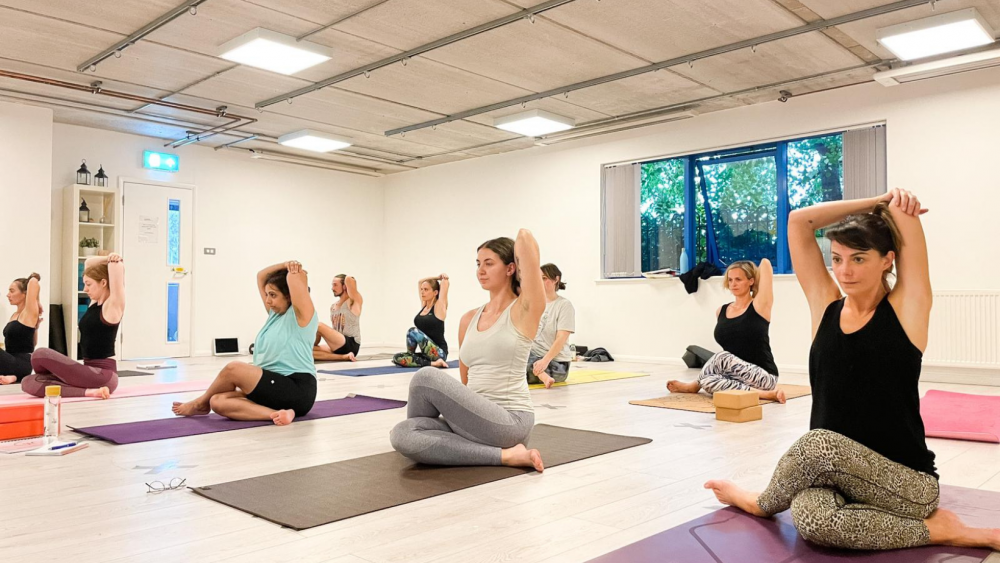
We also have to consider as modern day yoga teachers that a lot of students who come to class are coming for the physical benefits that asana can offer, they may choose asana as a way to compliment a sport or training that they do, and so learning about the history of this accent practice and ways in which they can live yoga off the mat isn’t something they want to know. We should also consider in an asana based class it’s quite important that as teachers we focus on student safety, and so because of that, we should be delivering safety cues for asanas, checking in with students, offering props and modifications if required, if we tried to add in anything else you run the risk of the student being incredibly overwhelmed.
How can I introduce some spirituality, history and philosophy into my yoga classes?
There are ways to introduce some spirituality should you want to do so, maybe further along in your teaching career, here’s how:
Pranayama
There are many different types of Pranayama developed thousands of years ago, some more complicated than others, but all are a great way to bring some spirituality and history into your yoga class.
We have written a blog on What is Pranayama? if you'd like to check it out.
Meditation
This is something quite easy to add to the beginning and the end of a yoga class, it can be done in silence or perhaps with some accompanying music. A chance for students to be still and to still the mind, focussing just on breathing in and breathing out. A nice way to bring that spirituality in and for students who want to try meditation it can be a nice way to start the practice.
Chanting
Like the two points before, chanting is an ancient ritual within yoga but something simple to add in. We don’t need to consider lengthy chants here, it can be a short Om/Aum at the end of class, Om/Aum is considered to be the first sound of the universe and is said to connect all living beings to the universe.
Want to know more?
If you'd like to know more about our 200hr Yoga Teacher Training, 300hr Yoga Teacher Training, or the combined 500hr Yoga Teacher Training we offer you can view the course syllabus on our courses section - and if you require any further information please contact info@yogacourse.com.


hey there!
.jpg)
We would like our blog to be a place where you learn new things in the world of yoga, when it comes to business of yoga, asanas, philosophy and pranayama.


.jpg)
