
Building connections through adjustments in yoga class
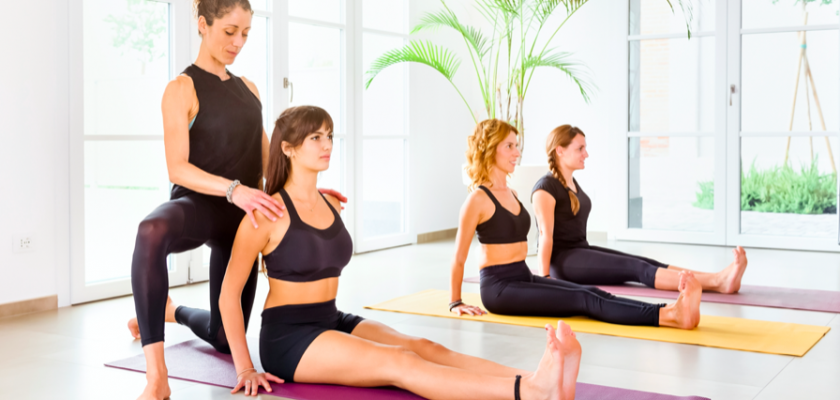
In what can sometimes be a sexualised society a simple touch inviting some relaxation, or better alignment within a Yoga class, can leave one student feeling completely different emotions than the next.
There is also a growing awareness that some over enthusiastic, and sometimes the inexperienced teachers within our community could actually be a risk to students when adjusting. Likewise getting close to a student to adjust can sometimes be just as dangerous for the teacher.
This has led to some studios now having a ‘hands off’ approach to teaching, which is a huge shame, because if done correctly, adjustments and assists not only build connections with students, but can actually help with building confidence within your students practice.
Most adjustments are done with hands, more specially the palms of the hands rather than pressing with fingertips, however some may require more than this. Any physical touch to your students must always be done carefully, respectfully and always with the students permission, and only if you have had some training in the correct way to adjust or assist.
So why do we adjust in Yoga?
Yoga in terms of the physical practice focuses’ on the alignment in postures to keep joints supported, allows for optimal muscle performance, and stops the body being in any awkward positions that might cause stress or damage.
Beginner yoga students
For beginners especially, moving their bodies into some of the postures we have in Yoga can be something they’ve never experienced before, and because of this they don’t necessarily understand their body in terms of activating certain areas from a verbal cue alone.
For example in a Plank position, we ask students to press into the earth to separate the shoulders blades creating space. You can say this however many times, in however many different ways you want, but for some students they will just not be able to turn that information into a physical movement and ‘self adjust’ - to help with this, placing the hand between the shoulder blades of your student and asking them to press up into your hand can be a real turning point.
Simple adjusts in Shavasana for example - just a gentle press on the shoulders to open the chest and relax the shoulders down, or a temple massage, can really allow students to feel that posture in a totally different way - it builds trust between teacher and student.
Intermediate and advanced students
Adjustments aren’t just reserved for our beginners students. Quite often your intermediate and advanced students will require support as well. This support can often be more of an assist than an adjustment.
Moving in to some advanced asanas are almost like being a beginner all over again. Although the student might understand the posture, understand their bodies, it’s just a little bit of direction they need to find that foot or hand, to move into a more advanced version of a posture.
Helping students to find that pose they’ve been working towards is equally as rewarding to you as a teacher as it is to your student, and is quite often the reason so many of us decide to teach - to share Yoga!
How should we adjust or assist?
As a teacher before doing any sort of adjustment, it’s important to firstly seek permission from the student, but secondly for you to understand their body and its capabilities. Many students who suffer from ailments come to Yoga to help them, however there may be some postures that their bodies just physically cannot do.
Trying to push students into a posture until it becomes more ascetically pleasing is not the purpose of an adjustment, and could leave a student feeling really frustrated, and ultimately could end their decision to practice with you, or worse, stop them practicing at all!
So what are the Top 3 things to remember when adjusting or assisting?
- Seek permission - always seek permission from your student before making any hands on adjustments or to assist.
- Be helpful - ensure what you’re doing is helping the student and not just making a posture look more aesthetically pleasing. Adjusts or assisting a student should be done with great consideration and respect to the body in front of you.
- Language - you are not "correcting" a posture as this could leave the student feeling that they’re not doing well - you’re "assisting" or “adjusting".
Want to know more?
If you’d like to be able to confidently bring adjustments or assisting into your teaching, you may consider our 300hr teacher training course, where we have a full module on this - to find out more you can view the full syllabus via www.yogacourse.com or simply email info@yogacourse.com with any questions.


hey there!
.jpg)
We would like our blog to be a place where you learn new things in the world of yoga, when it comes to business of yoga, asanas, philosophy and pranayama.


.jpg)
