
Why is Downward Facing Dog Pose Important?

Why is Downward Facing Dog Pose (Adho Mukha Shvanasana) so important? Well, one reason is it’s probably the most used posture in yoga classes throughout the world. It’s a restful posture, but can also be used as a posture to build strengthen our practice, and intensity within a vinyasa ..it offers all of that, as well as being a fantastic way to transition our students.
The benefits of this posture include extending and lengthening the spine, it stretches the whole of the back, shoulders, hamstrings, calves, and the arches of the feet and hands - almost a full body experience!
What does it look like?
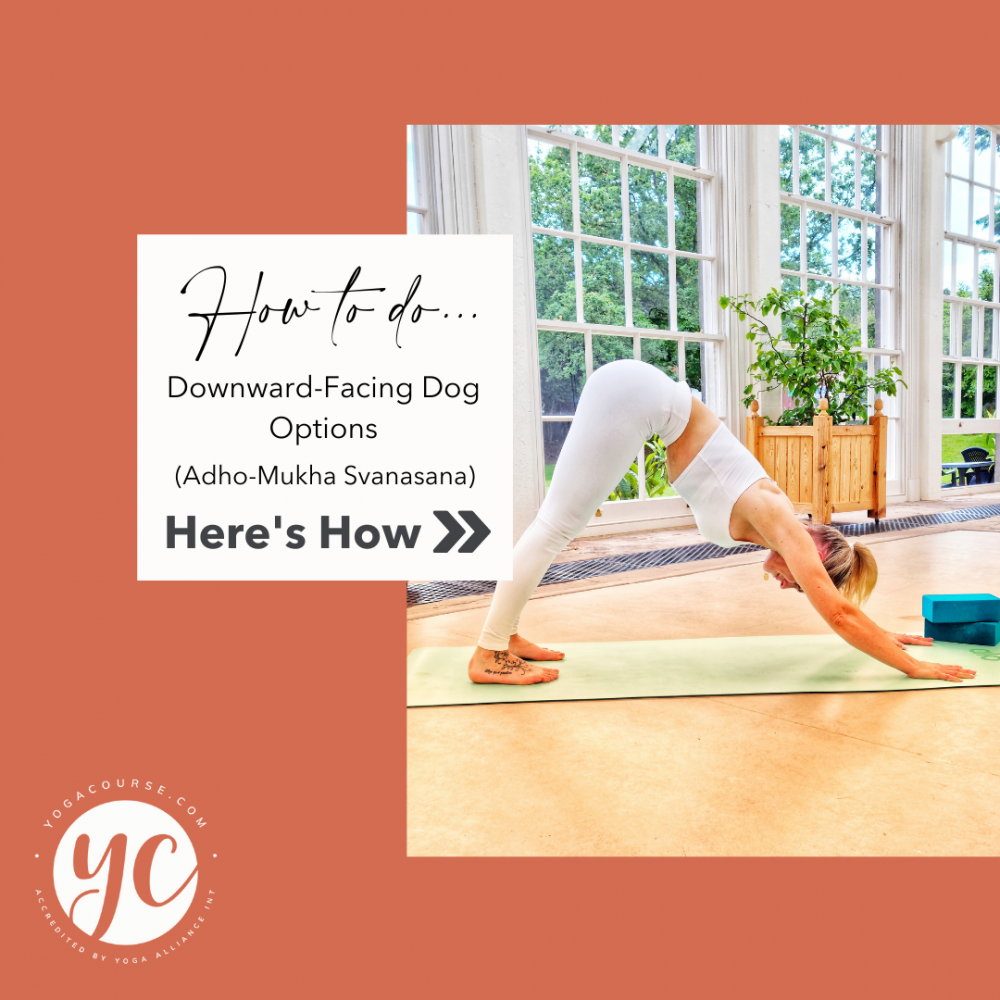
An easy way to access this posture would be from Table Top (Bharmanasana), with the shoulders stacked over the wrists and the hips stacked over the knees. Then we would ask students to tuck the toes under, press the sitting bones back towards the heels of the feet, press through the hands and feet and lift the sitting bones upwards, drawing the chest through towards the thighs, creating an upside down V shape with the body.
Now what you do once you’re in this pose is down to an individual’s own anatomy and what feels better for them. Generally teachers will cue to have the feet at about hip distance and the hands at about shoulder distance, head and neck relaxed, arms externally rotated, maintaining a micro-bend in the knees.
Some other options:
Hands wider can help with stiffness within the shoulders and give more space for the chest to come through and aid us in creating a long straight spine.
Feet together with the the toes turned in slightly can offer more of a deeper stretch to the hamstrings.
Knees bent, or heels against the wall or on blocks can support any tightness in the hamstrings.
Ouch!
Students with carpal tunnel or shoulder / rotator cuff type injuries might benefit from doing this posture on the forearms (Dolphin Pose - Ardha Pincha Mayurasana ), as apposed to the hands where there is an element of pressure on the wrists. Or specifically for carpal tunnel, blocks can also help.
Students with particularly tight hamstrings or any lower back discomfort can bend the knees to take away any pressure from those areas of the body.
We can also have the heels lifted, they do not need to meet the mat, but students should have the weight in the heels reaching them towards the mat.
Things to watch out for when teaching this posture can be:
Compressing through the cervical spine - so either not relaxing the shoulders, or tilting the head back.
Some students can also cause spinal injury through tucking the chin in towards the chest.
Bending or hyperextending the elbows, or hyperextending the knees, collapsing through the shoulder blades and rounding through the spine.
Students feeling this in their wrists will benefit from engaging Hasta Bandha, the majority of the weight will be in the thumb and index finger, slightly less through the middle, third, little finger and the outside edge of the hands, and no weight in the middle of the palm.
Check out our Instagram post all about the Downward Facing Dog options - just click the image below.
How to prepare for Downward Facing Dog?
So although this is a restful posture, as we said previously it’s still almost a full body experience, so there needs to be an element of prep for your student prior to bringing them in to it.
Wrists:
Utilise Table Top to warm the wrists by gently shifting the weight forwards to stretch the back of the wrists.
Another gentler option would be to sit in a comfortable seat, bring the palms of the hands together, interlace the fingers and then roll the wrists clockwise and anti-clockwise.
Claves, Hamstrings and Feet:
Utilise Table Top again here to extend one leg behind you tucking the toes, gently press the heel away to stretch the arches of the foot, toes, calf and slightly into the hamstring, ensuring you keep the navel drawn in towards the spine.
Shoulders:
In a comfortable seat, gently roll the shoulders forwards for a few rounds of breath, and backwards for the same.
Want to know more about our yoga courses?
If you’d like to learn more about yoga, or how to teach yoga, then please visit the course section of our website www.yogacourse.com where full syllabus’s can be found for all of our training courses.


hey there!
.jpg)
We would like our blog to be a place where you learn new things in the world of yoga, when it comes to business of yoga, asanas, philosophy and pranayama.


.jpg)
